
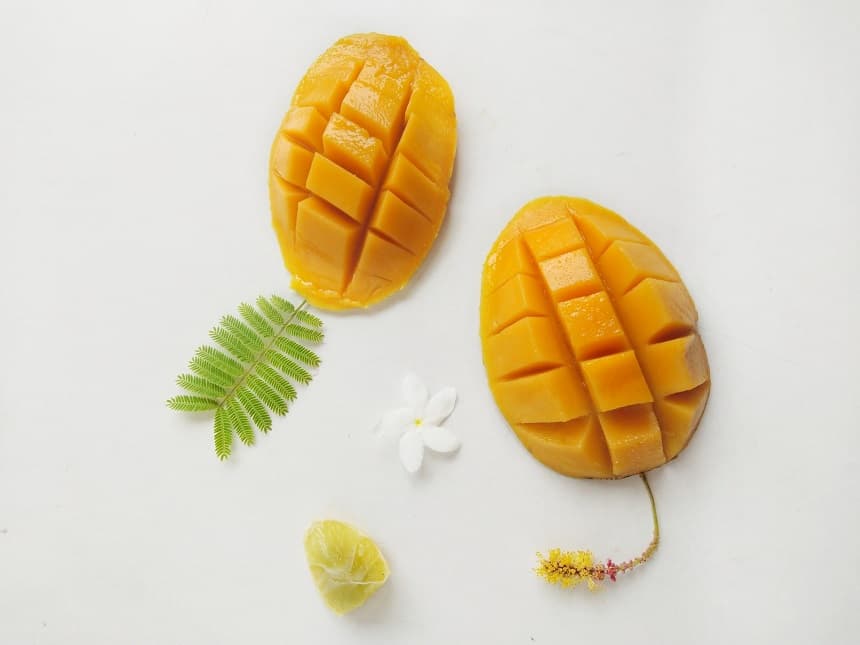
Dear readers: Since my mind constantly confuses Mangos and Avocados and I never know which name to attach to which fruit, and since I’ve recently written about Avocados, it is appropriate that I should write a short post on Mangos too.
This is only fair because Mangos are an awesome addition to a very healthy diet!
Mangos originate in India and their relatives are niceties like Cashews and Pistachio – I bet you didn’t know that.
Let me mention a few important nutrients you’ll get with every ripe Mango – those that are not yet ripe and ready have a smooth and green surface, which turns into golden yellow or orange red when it’s ready to eat.
Why should we eat Mangos?
I’ve talked about pre-biotics already and Mango fruit is rich in those dietary fiber – together with a rich content of poly-phenolic flavonoids (similar to the ones found in green tea), Mango protects against colon cancer.
Flavonoid anti-oxidants have been found to protect against breast and prostate cancer and leukaemia too. These results have been testing lab concentrations of flavonoids (which are much higher than in a single Mango) so the actual effects may not be as strong but still, flavonoids are known for their health benefits in protecting against cellular damage.
Mango is a heart healthy food as it is a rich source of potassium while being low in sodium. Similar to a tomato, it protects the heart.
It is good for the eyes and skin because it’s a rich source of vitamin A and in addition, it also contains vitamin C, E and B6 (pyridoxine). B6 is important for brain’s normal functioning.
Lastly, do not peel a Mango because its peel contains phytonutrients, which are also potent antioxidants.
While I may never learn how to distinguish the words Mango and Avocado, I urge you to consider both of them and include them in your regular diet.
Super foods are all we need.
Yours in health,
Dr. Mo
